
Retail Payment Processing Solutions for Fast, Secure Transactions
Slow checkouts cost sales. Failed authorizations frustrate staff. Chargebacks drain margin. If you are comparing Retail Payment Processing Solutions for Fast, Secure Transactions, you are probably trying to fix all three at once without adding complexity at the register. That is exactly where merchants get stuck: they need speed for customer flow, strong security for card data, and reporting that actually helps operators make decisions.
At No KYC Crypto Card Guide, we spend a lot of time evaluating how modern payment rails perform in real retail settings, from single-location shops to multi-store brands. The best systems do more than move money. They reduce checkout friction, connect in-store and online sales, support tap-to-pay and mobile wallets, and help retailers manage fraud without turning every payment into an interrogation.
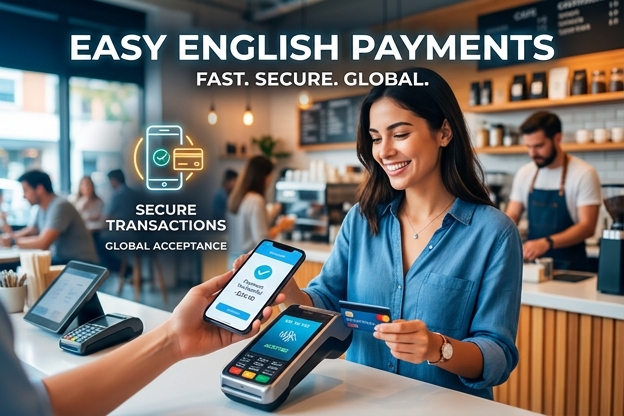
Retail payment processing solutions for fast, secure transactions are the platforms, gateways, hardware, and backend services that let stores accept and settle customer payments quickly while protecting payment data and reducing fraud. In practice, that means a mix of POS software, payment terminals, tokenization, encryption, fraud controls, and merchant account services working together.
When these systems are chosen well, retailers see shorter lines, better approval rates, lower operational risk, and a smoother customer experience across in-store, curbside, self-checkout, and e-commerce channels.
Table of Contents
- Why payment speed and security matter more than ever
- The core components of a modern retail payment stack
- How to evaluate providers for real-world store performance
- Common retail use cases and the best-fit solution types
- Comparison table for popular retail business scenarios
- Implementation steps that reduce disruption
- Risks, limitations, and hidden costs to watch
- First-person case study from the field
- What is changing in retail payments through 2026
- How to choose the right next move for your store
Why Payment Speed and Security Matter More Than Ever
Retailers do not lose revenue only when a customer walks out empty-handed. They also lose it when checkout takes too long, when a terminal freezes, when an online order is flagged incorrectly, or when staff have to restart a payment because systems are not in sync. Payment speed is no longer a nice operational perk. It directly affects conversion, queue length, labor efficiency, and repeat visits.
Security matters just as much, but retailers often think about it only after a chargeback spike or compliance issue. According to the National Retail Federation’s 2024 retail security reporting, fraud pressure remains elevated as merchants manage a mix of card-present, card-not-present, and omnichannel abuse patterns. At the same time, Visa’s public guidance across recent years has continued to emphasize tokenization, EMV, and layered authentication as key controls for reducing exposure.
There is also the customer expectation angle. Shoppers expect to tap, insert, swipe, pay with a phone, split payments, use buy now pay later, redeem loyalty points, and get a receipt instantly. If your system cannot keep up, the friction feels bigger than it did a few years ago because people now compare every store experience against the fastest checkout they had that week.
“Retailers should think of payments as a customer experience system, not just a back-office utility. Approval rate, checkout speed, and fraud controls all shape revenue quality.”
The Core Components of a Modern Retail Payment Stack
A strong retail payment environment is built from several connected layers. Merchants often focus on the terminal because it is visible, but the real performance comes from how the pieces communicate behind the scenes.
POS Software and Store Operations
Your point-of-sale software should handle item catalog, taxes, discounts, returns, staff permissions, and receipts without slowing down payment acceptance. The best POS systems also unify in-store and online inventory, which reduces refund confusion and overselling.
Payment Gateway and Processor
The gateway securely transmits payment data, while the processor routes the transaction through card networks and issuing banks. In many retail setups, these functions are bundled, but not always. What matters is latency, uptime, and how often valid transactions are approved.
Merchant Account and Settlement
This is where funds are held and then deposited into the retailer’s bank account. Settlement timing affects cash flow, especially for businesses with tight inventory cycles. A “cheap” provider can still be expensive if reserves, holds, or delayed funding hurt operations.
Security Controls
Retail security now depends on end-to-end encryption, tokenization, EMV support, role-based access, audit logs, and chargeback monitoring. According to IBM’s 2024 Cost of a Data Breach Report, credential misuse and stolen data remain major cost drivers across incidents, which is why merchants should not rely on passwords and PCI paperwork alone.
Analytics and Reconciliation
If finance teams cannot easily match deposits, fees, refunds, and chargebacks, the system creates hidden labor costs. Good payment reporting should show net settlement, transaction-level detail, location performance, and exception handling in one place.
How to Evaluate Providers for Real-World Store Performance
Retail payment vendors love feature lists. Operators need proof. The right way to evaluate a solution is to stress-test it against your daily business realities.
- Transaction speed: How quickly does the terminal return approval for tap, chip, and wallet payments during peak hours?
- Omnichannel support: Can one customer profile connect in-store, online, and pickup orders?
- Hardware flexibility: Are terminals durable, easy to replace, and compatible with your POS setup?
- Security architecture: Does the provider use tokenization, encryption, device management, and role-based controls?
- Fee transparency: Are PCI fees, gateway fees, chargeback fees, and early termination charges clearly disclosed?
- Scalability: Will the system still work when you add locations, pop-ups, kiosks, or recurring billing?
- Support quality: Can you reach a payments specialist during evenings, weekends, and holiday surges?
According to a 2024 report by Deloitte on digital payments and commerce behavior, consumers increasingly reward convenience and speed while expecting merchants to maintain trust and privacy controls. That means the best provider is rarely the one with the lowest advertised rate. It is usually the one with the strongest combined score across uptime, fraud prevention, customer experience, and operational reporting.
Common Retail Use Cases and the Best-Fit Solution Types
High-Volume Grocery and Convenience
These businesses need rapid authorization, stable hardware, and support for contactless payments. Even a one-second delay matters when lanes are full. Offline failover and barcode integration also matter more here than in specialty retail.
Fashion and Specialty Stores
These merchants benefit from mobile POS, clienteling features, omnichannel returns, and loyalty integration. Returns management is especially important because payment and inventory systems must stay aligned to avoid refund disputes.
Luxury and High-Ticket Retail
Security, fraud screening, and staff verification controls deserve extra attention. High-ticket transactions carry a larger chargeback risk, so strong authentication and detailed receipts help protect margin.
Pop-Up Shops and Event Retail
Portability, cellular connectivity, and fast onboarding matter most. Merchants often need simple hardware, easy setup, and quick settlement rather than complex enterprise functionality.
Hybrid Retail With E-Commerce
This is where integrated retail payment processing becomes most valuable. A unified platform can reduce duplicate customer records, improve fraud review consistency, and simplify reporting across web, in-store, and pickup channels.
Comparison Table for Popular Retail Business Scenarios
| Business Type | Primary Payment Need | Best Solution Profile | Main Risk to Monitor |
|---|---|---|---|
| Neighborhood grocery | Fast contactless checkout | Integrated POS with EMV terminals and offline failover | Lane slowdowns during peak traffic |
| Boutique apparel chain | Omnichannel returns and loyalty | Unified commerce platform with mobile POS | Disconnected inventory and refund disputes |
| Electronics retailer | Fraud controls for high-ticket sales | Processor with advanced risk scoring and detailed receipts | Chargebacks and false declines |
| Festival pop-up vendor | Portable acceptance and quick setup | Wireless terminal with simple flat-rate processing | Connectivity drops and delayed settlement |
| Home goods brand with online store | Shared customer data across channels | Gateway plus POS stack with centralized reporting | Fragmented analytics and duplicated fraud reviews |
Implementation Steps That Reduce Disruption
Replacing payment infrastructure can go wrong when retailers try to flip everything at once. A phased rollout is usually safer, especially if your current setup still processes reliably.
- Audit your current flow: Map every payment touchpoint, including returns, split tenders, gift cards, refunds, and online orders.
- Define success metrics: Set targets for checkout time, approval rate, chargebacks, uptime, and reconciliation effort.
- Run a provider test: Pilot at one or two locations before chain-wide deployment.
- Train frontline staff: Cashiers and managers need scripts for failed taps, card declines, refunds, and terminal resets.
- Check reporting early: Finance teams should validate deposits and fee breakdowns before full rollout.
- Review security settings: Lock down roles, terminal permissions, and admin access before launch.
- Monitor the first thirty days: Track exceptions daily so small errors do not become costly patterns.
The reason this matters is simple: payment migrations create operational noise. If you do not isolate issues fast, staff blame the new system for every delay whether the root cause is training, Wi-Fi, gateway routing, or SKU configuration.
Risks, Limitations, and Hidden Costs to Watch
Every retail payment processing solution has tradeoffs. Some of the fastest onboarding tools come with weaker customization. Some enterprise platforms are powerful but expensive to maintain. Some low-rate processors look attractive until monthly minimums, PCI programs, and hardware leases are added back in.
Here are the most common issues retailers underestimate:
- False declines: Strong fraud rules can block legitimate customers, especially for high-ticket items and tourist-heavy stores.
- Vendor lock-in: Proprietary hardware and closed gateways make later migration harder.
- Chargeback burden: A provider may process payments efficiently but still offer weak dispute support.
- Complex omnichannel data: Cross-channel customer profiles are useful, but poor setup can create duplicate records and reporting errors.
- Connectivity dependence: Cloud-heavy systems need strong internet resilience and backup plans.
Security is not absolute either. Tokenization, encryption, and EMV significantly reduce risk, but they do not remove insider threats, social engineering, weak access control, or refund abuse. Retailers still need disciplined operations.
“Merchants often ask how to eliminate fraud. The better question is how to reduce bad losses without hurting good sales. That balance is where the best processors separate themselves.”
First-Person Case Study From the Field
When we at No KYC Crypto Card Guide reviewed payment workflows for a specialty retail operator with both in-store and online sales, the main complaint was not fees. It was friction. Their in-store terminal flow was acceptable, but refunds from online orders processed in-store took too long, and staff often had to look up order details in a separate system. Customers noticed the delay immediately.
I worked through the checkout path with the store manager during a Saturday rush. We counted multiple moments where staff paused to verify transactions across disconnected screens. That extra handling did not just slow the line. It increased the chance of refund mistakes and weakened the customer experience at the exact moment when trust mattered most. Once the retailer moved to a more integrated payment and POS setup, same-day returns became simpler, staff training time dropped, and managers had cleaner end-of-day reconciliation.
In another review, I looked at a pop-up retail brand that had chosen a low-friction mobile processor for event sales. It was easy to start with, but cellular coverage at certain venues caused authorization delays. At first the owner blamed the processor entirely, but the deeper issue was the lack of a proper offline contingency and weak device readiness routines before events. We recommended a setup with better connectivity options, standardized pre-event checks, and clearer staff fallback procedures.
The result was not perfect, because event retail never is, but transaction completion became more stable and post-event settlement review took far less time. That experience reinforced something we repeat often at No KYC Crypto Card Guide: the right solution is the one that matches your operating environment, not the one with the loudest advertising.
What Is Changing in Retail Payments Through 2026
The next phase of retail payments is not just about accepting more payment methods. It is about orchestration. Retailers are moving toward systems that route payments intelligently, centralize customer data, and apply fraud controls based on context rather than blunt rules.
Tap-to-Pay and Wallet Growth
Contactless behavior is now standard in many markets, and mobile wallets continue to gain share for convenience and perceived security. Merchants that still treat tap acceptance as optional are falling behind customer habit.
Omnichannel Identity and Tokenization
Tokenized customer payment credentials allow smoother cross-channel experiences while reducing exposure to raw card data. This supports easier repeat purchases, subscriptions, and store-to-web continuity.
More Intelligent Fraud Decisions
Risk models are getting better at using device, purchase history, location, and order behavior together. The goal is fewer false declines while still blocking suspicious activity. According to industry commentary from major card networks and payment platforms during 2023 to 2025, this balance is becoming a major competitive lever.
Alternative Tender Expansion
Buy now pay later, account-to-account payments, and in some niche cases crypto-linked spending tools are expanding customer choice. They will not replace cards in mainstream retail overnight, but they are shaping expectations around flexibility.
How to Choose the Right Next Move for Your Store
If your store is dealing with slow lines, recurring chargebacks, or messy reconciliation, start by identifying which problem hurts the business most. Retailers often buy broad platforms when they actually need a targeted fix first. For one merchant, that may be better terminal performance. For another, it is integrated refunds. For a third, it is stronger fraud review and chargeback documentation.
The strongest buying decisions usually come from matching three things: your average ticket size, your channel mix, and your tolerance for operational complexity. If you run a lean store team, usability matters as much as technical depth. If you have several locations and an online business, unified reporting can be worth more than a slightly lower processing rate.
No KYC Crypto Card Guide recommends a practical path:
- Document your top three payment pain points before talking to vendors.
- Pilot any new setup in a real store environment with peak-hour testing.
- Choose providers that show clear security controls, transparent fees, and usable reporting, not just promotional rates.
References
- IBM Cost of a Data Breach Report 2024 — widely cited research on breach cost drivers, security controls, and operational risk trends.
- National Retail Federation retail security reporting, 2024 — industry context on fraud pressure, retail risk priorities, and operational challenges.
- Deloitte digital payments and commerce research, 2024 — consumer and merchant insights on convenience, trust, and payment behavior.
- Visa public security and tokenization guidance, 2023-2025 — practical framework for EMV, tokenization, and secure transaction design.
FAQ
What are Retail Payment Processing Solutions for Fast, Secure Transactions?
-
They are the systems retailers use to accept, authorize, secure, and settle customer payments quickly. This usually includes POS software, payment terminals, a gateway, a processor, fraud controls, and reporting tools working together to support card, mobile wallet, and sometimes alternative payments.
What features matter most for a retail payment processor?
-
Focus on the features that affect real operations:
Fast authorization speed at checkout
EMV, tokenization, and end-to-end encryption
Strong approval rates with low false declines
Easy reconciliation and transparent fee reporting
Support for omnichannel sales and returns
Are cheaper payment processing rates always better for retailers?
-
No. A lower advertised rate can be offset by PCI fees, monthly minimums, terminal leases, weak support, poor approval rates, slower funding, or higher chargeback losses. Total operating impact matters more than headline pricing.
How can retailers reduce payment fraud without hurting sales?
-
Use layered controls instead of rigid rules alone. A balanced setup usually includes:
EMV and tokenization for card-present security
Risk scoring that looks at behavior and device signals
Clear refund and return permissions for staff
Chargeback response workflows with strong documentation
Regular review of false declines and fraud thresholds
Do small retailers need omnichannel payment tools?
-
If they sell both online and in-store, yes. Even a small retailer benefits from unified customer records, easier returns, cleaner inventory sync, and more consistent reporting. If all sales are in person, a simpler setup may be enough.
How long does it take to switch retail payment systems?
-
It depends on store count, hardware needs, and system integrations. A single-location merchant can sometimes switch in days, while a multi-store omnichannel retailer may need several weeks for testing, staff training, reporting validation, and phased rollout.
What should I ask a provider before signing a contract?
-
Ask direct operational questions, including:
What is the average authorization time for tap and chip payments?
How fast are deposits funded?
What are all monthly, PCI, and chargeback-related fees?
How are refunds, partial refunds, and omnichannel returns handled?
What happens if internet connectivity fails during checkout?