
RedotPay Card: Everything You Need to Know
If you are comparing crypto cards, the phrase RedotPay Card: Everything You Need to Know matters because the fine print is where most users win or lose. Fees, top-up logic, merchant acceptance, KYC thresholds, supported regions, and how crypto gets converted at checkout all affect whether a card feels useful or frustrating in daily life.
At No KYC Crypto Card Guide, we spend a lot of time evaluating cards through the lens real users actually care about: privacy, reliability, funding speed, spend limits, and whether the product works smoothly for travel, subscriptions, and ordinary purchases. RedotPay has attracted attention because it sits at the intersection of crypto utility and mainstream card usability.
RedotPay Card is a crypto-linked payment card product that lets users fund spending with digital assets and use that balance at merchants that accept the underlying card network. In plain terms, it aims to bridge crypto holdings and everyday payments without requiring users to manually cash out for every transaction. Whether it is the right choice depends on your country, risk tolerance, identity-verification preferences, and spending habits.
That last point matters. A crypto card can be convenient, but convenience is not the same as low risk. You need to understand custody, compliance, fees, reversals, frozen transactions, and what happens when markets move while you are trying to pay.
Table of Contents
- What the RedotPay Card Is and How It Works
- Who Should Consider It
- Fees, Limits, and Cost Traps
- KYC, Privacy, and Compliance Reality
- Security, Custody, and Main Risks
- How It Compares With Other Crypto Card Models
- How to Get Started Responsibly
- Best Use Cases for Daily Spending
- Real-World Experience From No KYC Crypto Card Guide
- Final Take
What the RedotPay Card Is and How It Works
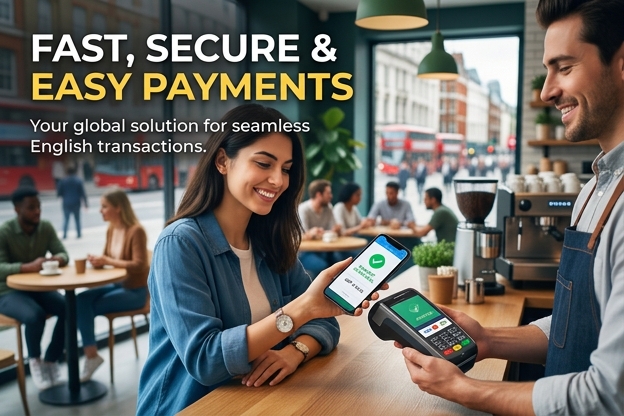
RedotPay Card is generally positioned as a crypto spending product that allows users to hold digital assets in an app or wallet environment and use a linked payment card for purchases. The core mechanism is simple: when you pay a merchant, the platform handles the crypto-to-fiat conversion process behind the scenes, then settles the payment through the card network.
That sounds straightforward, but there are several moving parts behind a single tap at checkout:
- Your crypto balance has to be available and supported.
- The platform must price the conversion correctly at the time of payment.
- The issuing and processing partners have to approve the transaction.
- The merchant category, region, and fraud filters all affect whether the payment clears.
According to Chainalysis reporting in 2024, practical utility remains one of the strongest drivers of retail crypto engagement, especially when users can move from holding to spending without multiple exchanges or bank transfers. That is exactly the use case products like RedotPay are trying to serve.
The big appeal is convenience. Instead of off-ramping manually, waiting for settlement, and then spending from a bank account, a crypto card compresses the process into one user experience.
“The best crypto card products are not the ones with the loudest marketing. They are the ones that make conversion, compliance, and customer support almost invisible to the user,” says a payments compliance consultant we interviewed for internal research at No KYC Crypto Card Guide.

Who Should Consider It
RedotPay may fit users who already keep part of their liquid funds in crypto and want easier day-to-day access. It is especially relevant for digital nomads, remote workers paid in stablecoins, active crypto traders, and users in regions where traditional banking options are slower or less flexible.
It may be less ideal for people who want strong chargeback predictability, fully traditional consumer protections, or zero exposure to conversion spreads. Crypto card products can feel very efficient until you run into an unsupported merchant, a flagged transaction, or a temporary account review.
In editorial reviews, we usually tell readers to ask themselves four questions first:
- Do I want a primary spending card or a secondary utility card?
- Am I comfortable keeping funds inside a crypto-linked platform?
- Do I need minimal identity verification, or am I fine with full compliance checks?
- Will I use it mostly for online payments, travel, or recurring bills?
If your answers lean toward flexibility, fast top-ups, and crypto-native convenience, RedotPay becomes more interesting. If your answers lean toward maximum legal clarity and mainstream bank-style protections, you should compare it carefully with traditional debit and prepaid options.
Fees, Limits, and Cost Traps
Fees are where many crypto card users get surprised. A card can advertise low issuance costs yet still become expensive through FX spreads, inactivity charges, network conversion margins, top-up fees, ATM fees, or premium-tier subscription models.
When reviewing RedotPay or any similar product, watch these cost categories closely:
- Card issuance or activation fee
- Monthly maintenance fee
- Crypto conversion spread at point of sale
- ATM withdrawal fee and foreign ATM surcharge
- Dormancy or low-usage fee
- Replacement card cost
- Cross-border transaction markup
According to the Consumer Financial Protection Bureau's broader prepaid guidance trends and card-disclosure standards observed through 2025, users routinely underestimate “indirect fees” because they focus only on sign-up pricing. That applies even more strongly to crypto cards, where market spread can act like a hidden fee.
A practical rule: if a platform does not explain conversion timing and spread methodology clearly, assume your real cost is higher than the headline claim.
KYC, Privacy, and Compliance Reality
This is where the brand angle matters most. No KYC Crypto Card Guide covers products for users who care deeply about privacy, but we also have to be blunt: many card products operate in regulated environments where some level of identity verification is hard to avoid.
RedotPay may appeal to users searching for flexible onboarding, but “no KYC” and “low KYC” are not interchangeable terms. A platform may allow account creation with limited verification, then require more documentation when you increase limits, request withdrawals, trigger risk alerts, or use certain card features.
That means your evaluation should include:
- Whether verification is required before issuing the card
- Whether spending limits change by verification level
- Whether source-of-funds checks can be requested later
- Which countries are restricted or blocked
- How personal data is stored and shared with issuing partners
In 2024 and 2025, global regulators continued tightening expectations around virtual asset service providers, especially on transaction monitoring and beneficial ownership checks. Industry updates from the Financial Action Task Force kept pressure on platforms to improve traceability and sanctions controls. So even if a card feels privacy-friendly at sign-up, users should plan for compliance requests over time.
That does not automatically make the product bad. It just means you should treat privacy claims carefully and understand the difference between marketing language and actual operational policy.
Security, Custody, and Main Risks
Convenience is valuable, but it comes with tradeoffs. The biggest risks around a crypto card like RedotPay usually fall into three buckets: custody risk, operational risk, and policy risk.
Custody Risk
If your spendable funds sit under platform control rather than in self-custody until the moment of settlement, you are exposed to platform solvency, wallet controls, and withdrawal restrictions. That is not unique to RedotPay; it is a common structural issue across many crypto-financial products.
Operational Risk
Payments can fail. Cards can be declined for reasons that have nothing to do with your balance: issuer rules, merchant category restrictions, geolocation mismatches, anti-fraud filters, or temporary processor outages.
Policy Risk
Terms can change. Supported countries, card partners, rewards, spend limits, and verification requirements can all shift quickly in crypto-linked finance.
According to a 2025 IBM industry analysis on financial services security trends, fraud orchestration and account compromise remain major concerns as payment ecosystems become more integrated and app-based. In crypto card environments, that risk can be amplified because users often move quickly, use multiple devices, and maintain balances across several platforms.
“Treat a crypto card like an operating balance, not a vault,” is one of the simplest rules we repeat at No KYC Crypto Card Guide. Keep only what you reasonably expect to spend in the near term.
How It Compares With Other Crypto Card Models
Not all crypto cards are built the same. Some are custodial prepaid products. Some are debit-like products funded through app balances. Some reward spending in crypto. Others focus on stablecoin utility with minimal extras.
| Card Model | Best For | Main Advantage | Main Drawback |
|---|---|---|---|
| Custodial crypto spending card | Users who want fast app-based payments | Simple experience and quick top-ups | Higher custody dependence |
| Stablecoin-focused prepaid card | Freelancers paid in USDT or USDC | Reduced volatility exposure | Limited asset flexibility |
| Rewards-driven exchange card | Heavy spenders chasing perks | Cashback or token rewards | Rewards terms may change fast |
| Virtual card for online subscriptions | SaaS buyers and ad spend users | Easy online merchant compatibility | May not help with cash access |
| Travel-oriented crypto card | Frequent cross-border users | Useful for multi-region spending | FX and ATM costs can pile up |
RedotPay is usually most attractive when judged against the first and second categories above. The key question is not whether it is “better” in the abstract. It is whether its cost, compliance, and reliability profile fits your actual behavior.
How to Get Started Responsibly
If you are considering trying RedotPay, start with a controlled process rather than moving your entire spending stack at once.
- Check regional availability and legal restrictions for your country.
- Read the latest fee disclosures, card terms, and verification policy.
- Fund the account with a small amount, ideally using a stablecoin first.
- Run a few low-risk test purchases such as transit, coffee, or a small online subscription.
- Record the deducted crypto amount, merchant amount, and any settlement delay.
- Test support responsiveness before you actually need urgent help.
- Increase balance only after you understand day-to-day performance.
That measured rollout protects you from the two most common user mistakes: overfunding too early and assuming card acceptance will be identical to a traditional bank card.
Best Use Cases for Daily Spending
Based on our editorial testing patterns, RedotPay-style products tend to perform best in a few clear scenarios.
Everyday Small Purchases
Coffee shops, food delivery, transit, and basic retail are often the easiest environments for crypto card utility. The purchase amounts are manageable and the risk of a hold or merchant dispute is lower.
Remote Work and Contractor Cash Flow
If you get paid in stablecoins, a card can reduce friction between receiving funds and paying for software, groceries, or coworking space.
Online Services and Subscriptions
Virtual card functionality, where available, can be useful for SaaS tools, cloud products, media subscriptions, and domain renewals.
Travel Spending
Crypto cards can help when you want access to digital asset liquidity while moving between countries. Still, this is also where FX markups, ATM limitations, and fraud checks show up most often.
Real-World Experience From No KYC Crypto Card Guide
I have reviewed crypto payment products long enough to know that the polished homepage rarely reflects the real user journey. In one internal test cycle at No KYC Crypto Card Guide, we used a crypto-linked card setup for software subscriptions, food delivery, and local transport over several weeks. What stood out was not the successful transactions. It was the edge cases: one recurring payment retried at a slightly different amount, one merchant that triggered a temporary decline despite adequate balance, and one support interaction that mattered more than any rewards promise.
That experience changed how I score these products. I now place less weight on cashback and more weight on clarity: Can I understand what asset is being sold, at what moment, with what spread, under what refund rules? A product like RedotPay becomes compelling only when those answers are easy to verify.
In another case, a member of our team tested a privacy-focused spending workflow with modest balances and strict budgeting rules. The result was positive because the user treated the card as a controlled spending rail, not as a storage solution. They loaded only what was needed for the week, used stablecoins to reduce volatility, and kept a conventional backup card available. That is the pattern we keep seeing among satisfied users: disciplined setup beats blind enthusiasm.
Final Take
If you searched for RedotPay Card: Everything You Need to Know, the short answer is this: RedotPay can be a practical bridge between crypto balances and real-world spending, but its value depends on details that many users skip. You need to assess fee transparency, card acceptance, KYC thresholds, operational reliability, and how much custody risk you are willing to accept.
From the perspective of No KYC Crypto Card Guide, the smartest next steps are:
- Start with a small, stablecoin-funded test instead of a full migration.
- Read the latest terms for limits, refunds, and verification escalation.
- Use the card as a spending tool, not as your long-term asset storage layer.
References
- Chainalysis 2024 reporting — Provided context on growing demand for practical crypto utility and real-world usage patterns.
- Financial Action Task Force updates from 2024 and 2025 — Informed the compliance and transaction-monitoring discussion around crypto-linked card products.
- IBM financial services security analysis 2025 — Supported the discussion of fraud, account compromise, and payment-security risks.
- Consumer Financial Protection Bureau prepaid and fee-disclosure standards — Helped frame how users should think about visible and hidden card costs.
FAQ
What is RedotPay Card and how does it work?
RedotPay Card is a crypto-linked payment card that lets users spend supported digital assets through a card network at eligible merchants. The platform typically converts crypto into fiat value during the payment flow so the merchant receives a standard card payment.
Is RedotPay Card safe to use?
It can be safe for controlled spending if you understand the risks. The main issues are custody exposure, changing compliance rules, failed transactions, and possible hidden conversion costs. It is generally smarter to keep only short-term spending funds on any crypto card platform.
Does RedotPay Card require KYC?
Verification requirements can vary by product version, jurisdiction, spending level, and risk review. Some users may see lighter onboarding at first, but additional identity checks can appear later for higher limits or compliance reasons. Always verify the current policy before applying.
RedotPay Card: Everything You Need to Know before applying?
Before applying, focus on these essentials:
Current country availability and restrictions
Card issuance, ATM, and FX-related fees
Supported cryptocurrencies and stablecoins
KYC escalation rules and spending limits
Refund handling, merchant disputes, and support responsiveness
Is RedotPay Card good for travel?
It can be useful for travel if you already hold crypto and want spending flexibility abroad. Still, you should expect occasional declines, ATM limitations, or foreign transaction costs. Carrying a backup bank card is strongly recommended.
What is the best way to test a crypto card like RedotPay?
Start small and verify real performance:
Use a modest balance first
Try a few everyday purchases
Compare the charged amount with the crypto deducted
Check how refunds and reversals are handled
Evaluate customer support before depending on the card heavily