
Why Travel Payments Break So Easily
If you run a tour company, OTA, destination management firm, cruise reseller, or group travel agency, getting approved for a travel merchant account is rarely straightforward. Banks see delayed fulfillment, high average order values, cross-border cards, refund spikes, and chargeback exposure. That mix can lead to higher fees, rolling reserves, slower underwriting, or flat-out declines.
That is exactly where No KYC Crypto Card Guide has built authority: helping readers and operators understand how high-risk payment setups actually work, what providers are really screening for, and how to structure a payment stack that supports bookings instead of choking them. If your current processor freezes funds every time sales spike, the issue is usually not volume alone. It is fit.
A travel merchant account is a payment processing account designed for travel-related businesses that accept card payments online, by phone, or in person. It is built for the higher risk profile of travel transactions, including future-dated services, international customers, and elevated refund or chargeback risk.
Unlike a standard retail merchant account, a travel-focused setup usually includes deeper underwriting, tailored fraud controls, and pricing structures that account for reserves, supplier relationships, and booking timelines.
Table of Contents
- Why travel businesses need a specialized payment setup
- How a travel merchant account actually works
- Which travel business models benefit most
- What underwriters review before approval
- How to choose the right provider
- Rates, reserves, chargebacks, and cash flow realities
- A real-world case study from No KYC Crypto Card Guide
- Future trends shaping travel payments
- Conclusion
- References
Why Travel Businesses Need a Specialized Payment Setup
Travel sits in one of the hardest corners of payments. A customer might book a $4,000 safari package in January for a departure in September. If the trip changes, a supplier fails, weather disrupts the itinerary, or the customer simply gets nervous and disputes the charge, the processor carries risk long before the service is delivered.
That delay between payment and fulfillment is the core reason generic processors often struggle with travel merchants. A standard eCommerce account is built for short delivery windows and relatively predictable refund behavior. Travel is different.
According to UN Tourism’s 2025 reporting on global tourism recovery, international tourism in 2024 returned to nearly pre-pandemic levels. That rebound is good for sales, but it also means more cross-border transactions, more currency complexity, and more fraud attempts moving through travel sites. At the same time, Mastercard Economics Institute’s 2024 travel research highlighted continued growth in experience-led spending, which means consumers are still willing to spend on trips even as they compare prices aggressively and expect flexible cancellation terms.
Put simply, payment volume in travel is back, but so is scrutiny.
How a Travel Merchant Account Actually Works
Underwriting realities
A travel merchant account is usually placed into a higher-risk underwriting lane. That does not automatically mean bad terms. It means the acquiring bank and processor want proof that your operation is stable, transparent, and able to absorb refund pressure.
Most providers will review your processing history, average ticket size, top destinations, customer geographies, supplier contracts, cancellation policies, fulfillment timelines, and chargeback ratios. If you are a startup, they may weigh owner experience and business model clarity more heavily than processing volume.
What matters most is whether your risk profile makes sense on paper. A merchant that can clearly show supplier reliability, clean disclosures, and documented customer support will often outperform a larger brand with messy policies.
Payment flow from booking to settlement
Once approved, the account connects your checkout or billing flow to an acquiring bank through a payment gateway or integrated processor. The customer pays with a credit or debit card. The transaction is authorized, captured, and then settled into your merchant account, minus fees and any reserve structure.
In travel, settlement terms may vary based on:
- Whether the service is delivered in days or months
- Your historical chargeback rate
- Domestic versus international card mix
- Refund policy and customer communication quality
- Whether you operate as merchant of record or intermediary
This is also where account design matters. A processor that understands split payments, deposit schedules, post-booking amendments, and multi-currency sales can reduce a lot of operational pain before it turns into disputes.
Which Travel Business Models Benefit Most
Not every travel seller faces the same risk profile. A hotel with direct bookings has different exposure than a custom luxury travel planner or a flight consolidator. The table below shows how underwriting often differs by model.
| Business Type | Typical Risk Level | Common Payment Challenge | Best Account Feature |
|---|---|---|---|
| Online travel agency | High | High dispute exposure and supplier dependency | Strong reserve planning and dispute management tools |
| Tour operator | High | Long lead times before service delivery | Flexible capture timing and staged billing |
| Hotel or villa direct booking site | Moderate | No-show disputes and card-not-present fraud | Pre-auth controls and fraud scoring |
| Corporate travel management firm | Moderate to high | Large ticket sizes and invoicing complexity | Virtual cards, level data, and account controls |
If your business falls into one of these categories, trying to force-fit a low-risk processor usually costs more later through holds, re-underwriting, and lost approvals.
What Underwriters Review Before Approval
Approval is not just about whether your company is legitimate. It is about whether your payment profile is manageable. A good application package answers that question before the underwriter has to ask.
Expect them to look closely at:
- Your website quality, booking flow, and visible terms
- Refund, cancellation, and change policies
- Prior processing statements, if any
- Chargeback ratio and refund ratio
- Owner background and travel industry experience
- Supplier agreements and business continuity risk
- Expected monthly volume, average ticket, and card geography
- Whether you bill immediately, take deposits, or charge in installments
A weak website alone can sink an otherwise solid application. If the checkout lacks clear policy links, customer support details, fulfillment timelines, or business identity signals, the account may be flagged as unstable or misleading.
“The best travel merchants are not the ones with zero risk. They are the ones who can explain their risk clearly, show how they control it, and prove they support the customer when plans change.”
How to Choose the Right Provider
A travel merchant account should not be selected on headline rates alone. Cheap pricing means very little if your funds are delayed, your MID is terminated after one bad month, or your gateway cannot handle your booking flow.
Use this process when comparing providers:
- Map your transaction model. Note your average booking value, lead time to travel, card countries, refund frequency, and whether you take deposits or full prepayment.
- Ask about reserve structure upfront. Some providers use rolling reserves, some fixed reserves, and some offer reserve reviews after strong performance periods.
- Check fraud tooling. Look for 3D Secure support, velocity rules, AVS, CVV enforcement, device fingerprinting, and manual review options.
- Review gateway compatibility. Make sure the account works with your booking engine, CRM, invoicing tools, and recurring or installment billing flow.
- Pressure-test support. Ask who handles urgent fund holds, chargeback alerts, and account reviews. If the answer is vague before sale, support will likely be worse after onboarding.
- Read the termination terms. Early exit fees, reserve release timelines, and prohibited use clauses deserve careful review.
There is also a strategic question many operators miss: do you need one provider, or do you need a primary-plus-backup stack? For larger travel sellers, routing flexibility can reduce concentration risk.

Rates, Reserves, Chargebacks, and Cash Flow Realities
Travel merchants usually pay more than standard eCommerce businesses. That premium reflects uncertainty around fulfillment and the high value of many transactions. The real cost, however, often sits in reserves and cash flow timing rather than the quoted processing rate.
Common fee components include discount rate, per-transaction fee, gateway fee, chargeback fee, and monthly minimums. On top of that, you may face a rolling reserve, where a percentage of sales is withheld for a fixed period. For a business with seasonal peaks, that can tighten working capital fast.
According to the 2024 LexisNexis True Cost of Fraud analysis for merchants, fraud costs extend well beyond the initial disputed amount because labor, fulfillment friction, and customer support overhead stack up behind every incident. In travel, those hidden costs are amplified by itinerary changes and supplier coordination. That is why the right account is partly a pricing decision and partly a resilience decision.
The balanced view matters here. A travel merchant account is not a magic shield.
- Benefit: Better approval odds for high-risk travel models
- Benefit: Risk tools tailored to card-not-present and cross-border traffic
- Benefit: Providers are more likely to understand delayed fulfillment
- Tradeoff: Higher fees and reserve demands are common
- Tradeoff: Underwriting can be documentation-heavy
- Tradeoff: One spike in disputes can trigger account review or volume caps
A Real-World Case Study from No KYC Crypto Card Guide
At No KYC Crypto Card Guide, I reviewed the payment setup of a boutique adventure travel company that sold guided trips across Latin America. Their old processor looked affordable at first, but every time a group departure opened and card volume jumped, the account entered manual review. Funds were delayed, customer service suffered, and supplier deposits became harder to manage.
I noticed the root problem was not fraud volume. It was mismatch. The processor had underwritten them like a generic online retailer even though the business accepted deposits months in advance, served international buyers, and changed itineraries frequently due to local conditions. We helped them rebuild the application narrative around their real model: staged payments, signed traveler agreements, documented supplier relationships, and clearer cancellation language on the site.
After moving to a provider that specialized in higher-risk travel flows, the company accepted slightly higher processing costs but gained faster settlements, fewer surprise reviews, and better chargeback documentation support. In plain terms, margin became more predictable.
I saw a similar pattern with a content-led travel booking brand experimenting with crypto-adjacent customer segments. The owner assumed alternative payment interest would reduce card pressure. It helped at the edges, but the core business still depended on cards. The smarter move was not replacing cards. It was building a stronger travel merchant account first, then adding optional payment methods for customer convenience.
“Travel founders often chase lower rates before they fix underwriting fit. That is backwards. Stable acceptance and reliable settlement usually create more value than shaving a few basis points off headline fees.”
Those cases reinforced a lesson I keep seeing: the best processor for a travel business is usually the one that understands your operational logic, not the one with the slickest signup page.
Future Trends Shaping Travel Payments
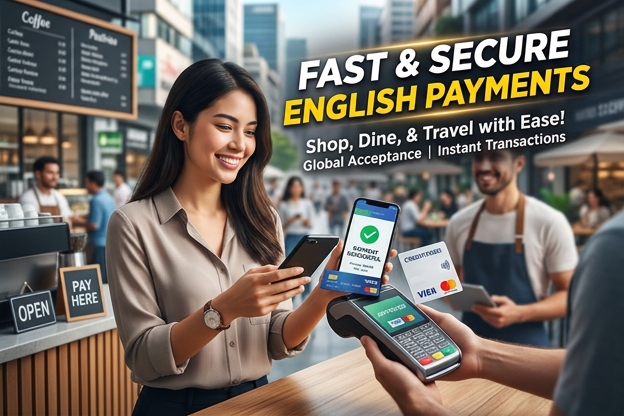
The next wave of travel payments will be shaped by risk automation, customer flexibility, and global acceptance demands. Processors are getting better at using richer merchant data to price and monitor accounts, but that also means low-quality merchants will be identified faster.
Here are the trends worth tracking through 2026:
- More granular underwriting: Providers are segmenting travel models more precisely instead of treating all travel sellers the same.
- Stronger authentication: 3D Secure optimization and behavioral fraud checks are becoming standard for cross-border travel traffic.
- Hybrid payment stacks: More merchants are combining cards with bank transfers, digital wallets, and region-specific methods to reduce checkout abandonment.
- Reserve personalization: Mature merchants with strong controls may get more dynamic reserve terms rather than one-size-fits-all withholding.
- AI-assisted dispute response: Better data packaging and reason-code workflows should improve representment efficiency, though policy clarity will still matter most.
According to the World Travel & Tourism Council’s recent economic outlook work, travel remains a major global growth engine. That creates opportunity, but it also means banks and acquirers will keep tightening standards around merchant quality. The winners will be businesses that combine strong customer experience with disciplined payment operations.
If you sell travel online, your payment stack is no longer a background utility. It is part of your growth infrastructure.
Conclusion
A travel merchant account is not just a way to accept cards. It is the financial framework that determines how reliably you can book, settle, refund, and scale. For travel brands, the central challenge is proving to banks and processors that your risk is understood and managed. The merchants that do this well gain stability, better support, and fewer operational shocks.
No KYC Crypto Card Guide recommends these next steps:
- Audit your current checkout, policies, and support visibility before you apply or renegotiate.
- Prepare a clean underwriting package with processing history, supplier details, and a realistic explanation of your booking model.
- Compare providers based on reserve policy, dispute support, and integration fit, not just advertised rates.
References
- UN Tourism, 2025 tourism recovery reporting: Provided context on the rebound of international tourism and why travel payment volume remains strategically important.
- Mastercard Economics Institute, 2024 travel research: Supported the point that experience-led travel spending remains strong and influences merchant payment demand.
- LexisNexis Risk Solutions, 2024 True Cost of Fraud analysis: Added perspective on the full operational cost of fraud beyond the face value of disputed transactions.
- World Travel & Tourism Council recent economic outlook data: Reinforced the long-term growth case for travel and the importance of stable payment infrastructure.
FAQ
What is a travel merchant account?
-
A travel merchant account is a payment processing account designed for travel-related businesses such as agencies, tour operators, hotels, and booking platforms. It accounts for higher risk factors like future-dated services, international cards, large ticket sizes, refunds, and chargebacks.
Why is travel considered high risk by payment processors?
-
Processors usually classify travel as high risk because of:
Long delays between booking and service delivery
High average order values
Cross-border card activity
Frequent itinerary changes, cancellations, or supplier disruptions
Elevated chargeback and refund exposure
How can I improve approval odds for a travel merchant account?
-
Focus on clarity and documentation. The biggest wins usually come from:
Publishing clear refund and cancellation policies
Showing customer support details prominently on your site
Providing clean processing statements and realistic sales forecasts
Documenting supplier relationships and fulfillment timelines
Keeping chargeback and refund ratios under control
Do all travel businesses need a rolling reserve?
-
No. Many travel merchants do face rolling reserves, but not all. The decision depends on your processing history, dispute trends, fulfillment timing, average ticket size, and overall underwriting profile. Established merchants with strong controls may negotiate lower reserves or periodic reserve reviews.
What features should I look for in a travel payment provider?
-
Strong travel-focused providers usually offer:
Support for high-risk or future-delivery transactions
3D Secure, AVS, CVV, and fraud screening tools
Flexible settlement and reserve structures
Compatibility with booking engines and installment billing
Responsive dispute and account management support
Can a startup get a travel merchant account without processing history?
-
Yes, but approval usually depends on stronger documentation. If you are new, underwriters may rely more heavily on founder experience, supplier contracts, financial stability, website quality, and the clarity of your travel policies. A startup can still be approved if the business model is presented well and the risk controls are credible.